
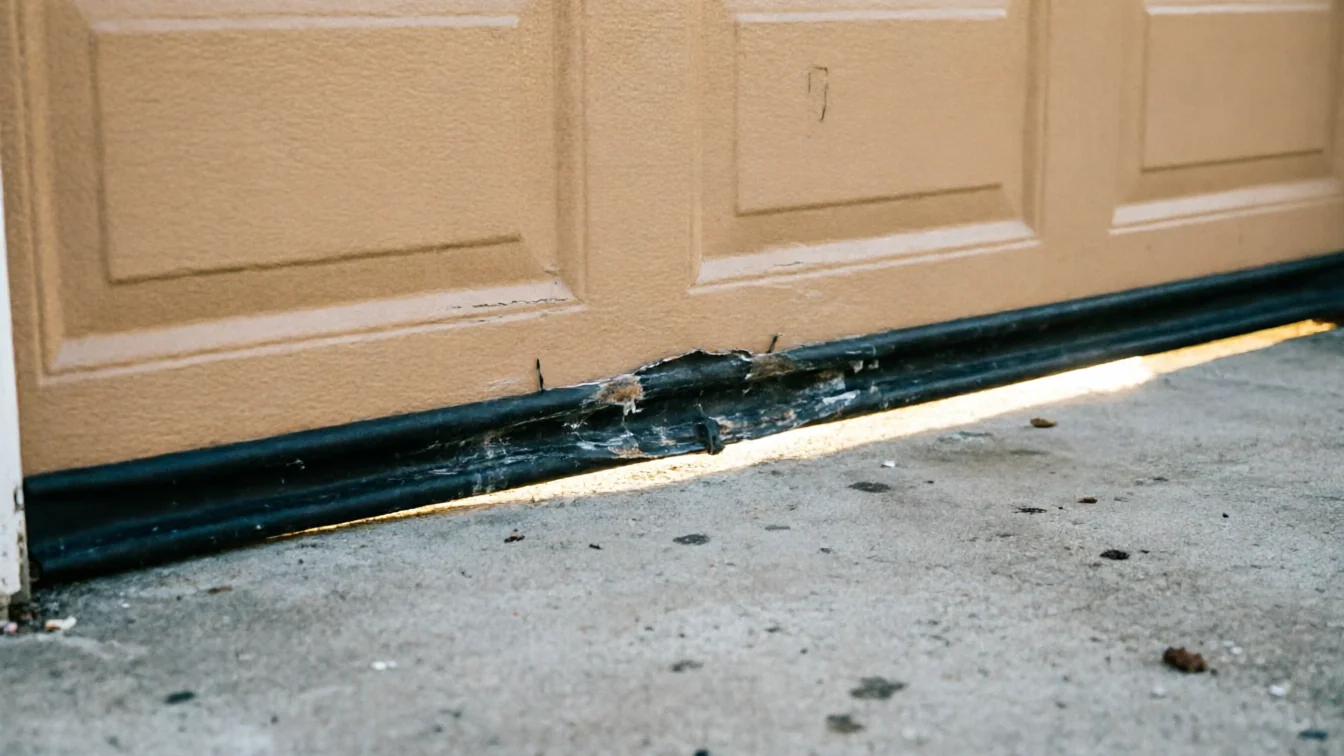
 Weather Seals and Draughts in Sunnyvale: What Your Garage Door Needs
How Sunnyvale's mild climate and 1947-1987 housing stock wear down garage door seals, what draughts mean, and what to check before you call for a repair.
When the Power Drops and the Opener Won't Move
A look at how Sunnyvale's mild climate and 1960s-70s housing stock shape what happens to garage door openers during a power cut, and what to check first.
Local detail
What the Weather Here Does to It
Sunnyvale sits in a mild temperate band, not the kind of place that gets ice storms or deep freezes that snap power lines for days. Most outages here are short - a utility crew working on a line, a planned shutoff, a transformer fault - and they clear in hours, not days. That matters for an opener more than people think. In places with hard winters, cold snaps crack circuit boards and condensation corrodes contacts over years of freeze-thaw. Here, the boards and relays in an opener motor housing tend to last longer simply because they're not cycling through that kind of temperature swing. The failure you get during a Sunnyvale power cut is almost always simple: the motor has no juice, the door is wherever it was when the power dropped, and nothing electronic is going to fix that until the power comes back or you pull the manual release. The mild climate doesn't save you from the inconvenience, it just means the hardware itself usually isn't the weak link.
The area
When to Get Help
If the power's out and the door won't budge even after you've pulled the red manual release cord, that's not a power problem anymore - something mechanical is binding, usually a spring or a track issue, and pulling on it harder risks a cable or a panel. Call at that point rather than keep forcing it. If the power comes back on and the opener hums but the door doesn't move, that's often the opener's logic board or a stripped gear, not the electrical supply, and it's worth a look before you assume it's fixed itself. One limit worth saying plainly: we work on the door and opener side of things, not the electrical panel or the wiring feeding your garage. If the outage is tied to a breaker or a wiring fault in the house, that's an electrician's job first - we come in after the power's confirmed good and the door still isn't behaving.
What we find
The Situation
Housing in this service area was mostly built between 1947 and 1987, with the median landing around 1964, and the bulk of it is 1960s-70s stock across the named neighborhoods, from the Heritage District close in to areas further out toward Old Mountain View and Sunnyvale West. A house built in that window has usually been through at least one or two openers already, and a fair number still run a chain-drive unit without battery backup, because that feature only became common on newer installs. Across the roughly 298,406 households in the broader area, including about 110,090 owner-occupied houses, that's a lot of garages where a power cut means the door sits dead until the grid comes back - no battery kicking in to let you out. With a median household income of $207,750 here, plenty of owners could afford the upgrade to a battery-backup opener without much thought, but it's the kind of thing that gets put off until the power actually goes out and you're standing in the dark pulling a release cord you've never touched before.
How we work
What to Check
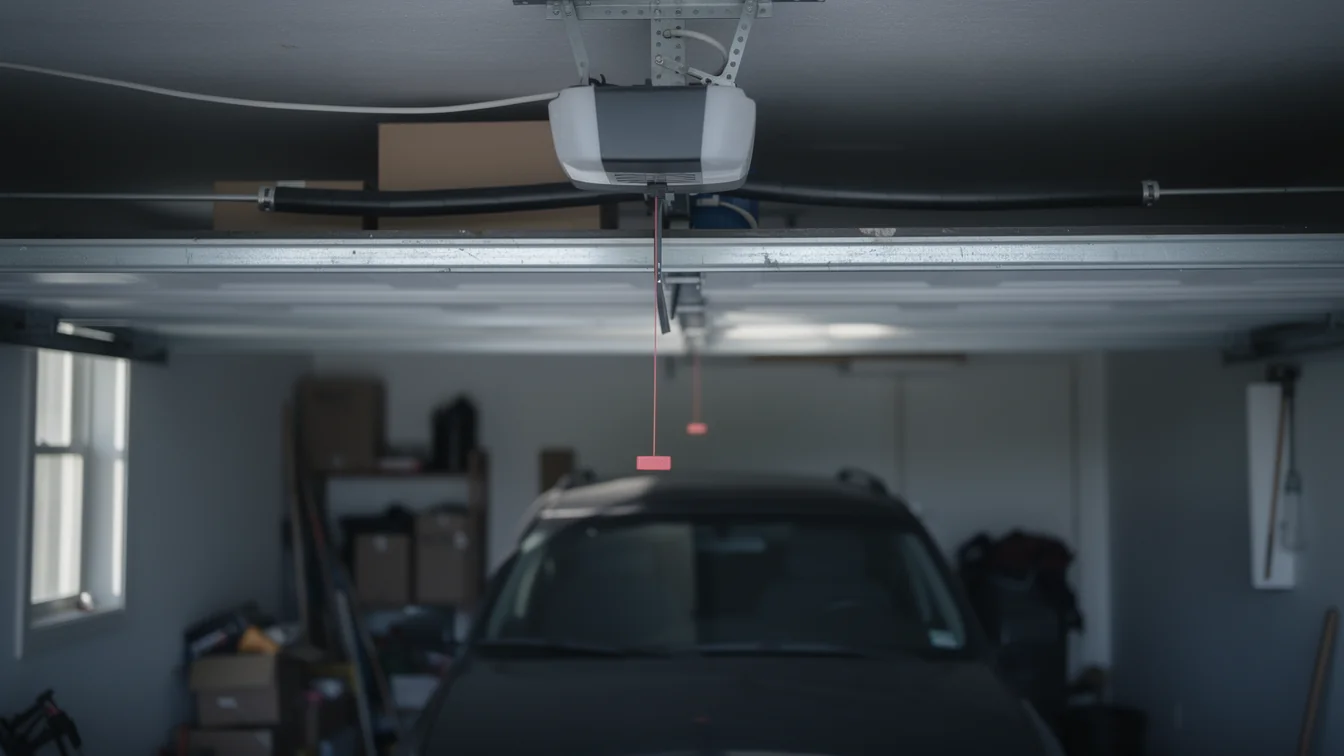
First, find the manual release cord - usually a red handle hanging from a strap near the opener head - and make sure it moves freely before you ever need it in the dark. If your opener predates battery backup, which is common in the 1960s-70s stock that makes up most of this area, know that in advance rather than discovering it during an outage. Check the breaker feeding the opener circuit separately from the house panel; a tripped breaker unrelated to the outage is a common false alarm. Look at the photo-eye sensors near the bottom of the tracks - a power cut can sometimes jostle them out of alignment when the door is manually operated, and the opener won't close the door on resume until they're lined back up. Last, if the opener is original to a house from that 1947-1987 build window, its motor and gearing are old enough that a power cut is sometimes the moment you notice it was already struggling - worth having it looked at even after the lights come back.
Questions
Common questions
Will my garage door opener still work during a power cut if I have a battery backup?
If your opener has a battery backup unit built in or added on, yes - it'll run the door a limited number of cycles on battery power until the outage clears. Many openers in this area, especially original units in houses from the 1960s-70s stock, don't have one. If yours doesn't, the door stays put until power returns or you use the manual release.
Why doesn't my opener restart automatically when the power comes back on?
Most modern openers need to relearn their door position after a hard power loss, especially if you used the manual release while the power was out. The photo-eye sensors can also shift slightly during manual operation and block the opener from closing until they're realigned. This is mechanical, not a sign the unit is failing.
Is it worth upgrading an old opener just for battery backup?
If your opener is already original to a house built in the 1947-1987 window and showing other age - slow response, grinding gears, a worn drive chain - battery backup is one more reason to replace rather than patch. If the unit is younger and running fine otherwise, adding a backup battery pack alone is usually the better call.
Recommendation
You Might Also Like
More garage door guides for Sunnyvale homeowners.
Weather Seals and Draughts in Sunnyvale: What Your Garage Door Needs
How Sunnyvale's mild climate and 1947-1987 housing stock wear down garage door seals, what draughts mean, and what to check before you call for a repair.
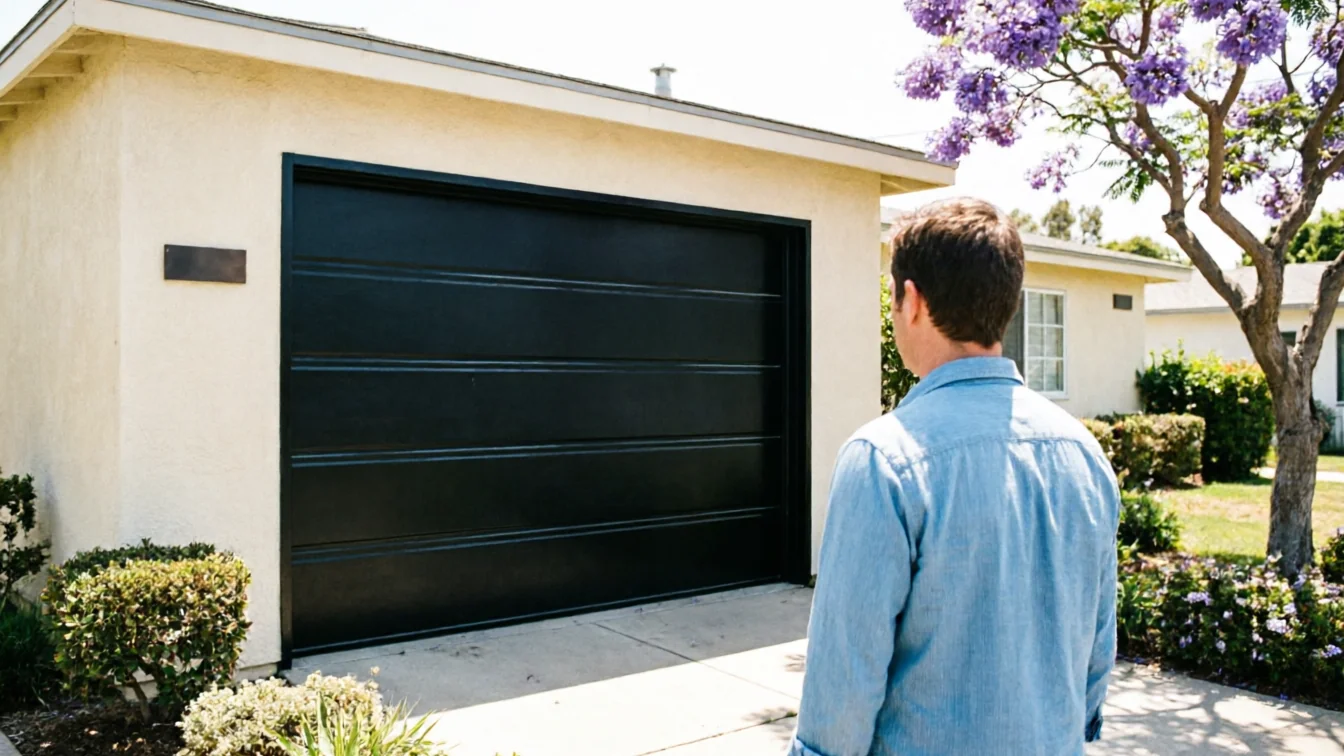 Replacing a Garage Door in Sunnyvale
A guide for Sunnyvale homeowners on replacing a garage door, built around this area's 1960s-70s housing stock and mild coastal climate.
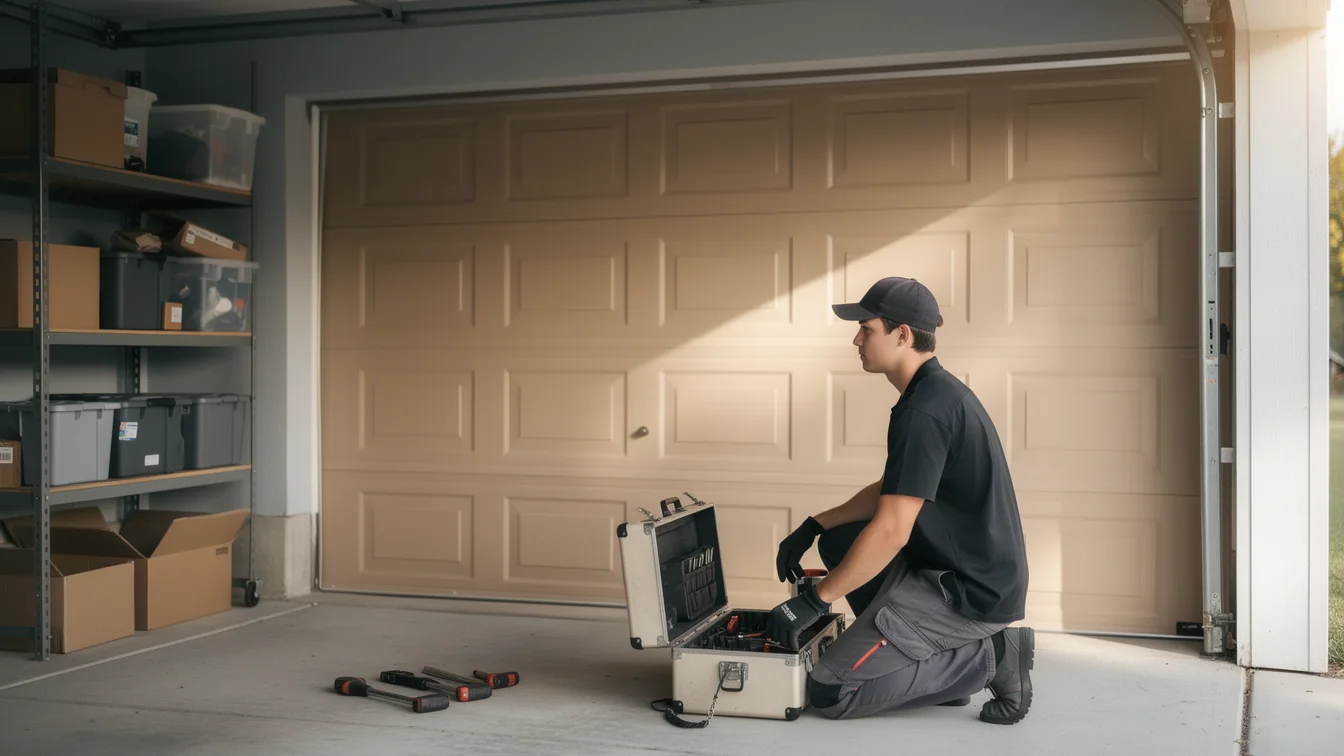 What We Actually Check on a Sunnyvale Service Call
Sunnyvale homeowners: see what a garage door service call actually checks, from 1960s hardware to mild-climate wear, before you book a repair.
Ready when you are
Need a garage door sorted in Sunnyvale?
Sunnyvale Garage Door Pros repairs and installs garage doors, springs and openers in Sunnyvale, CA and the surrounding area.