
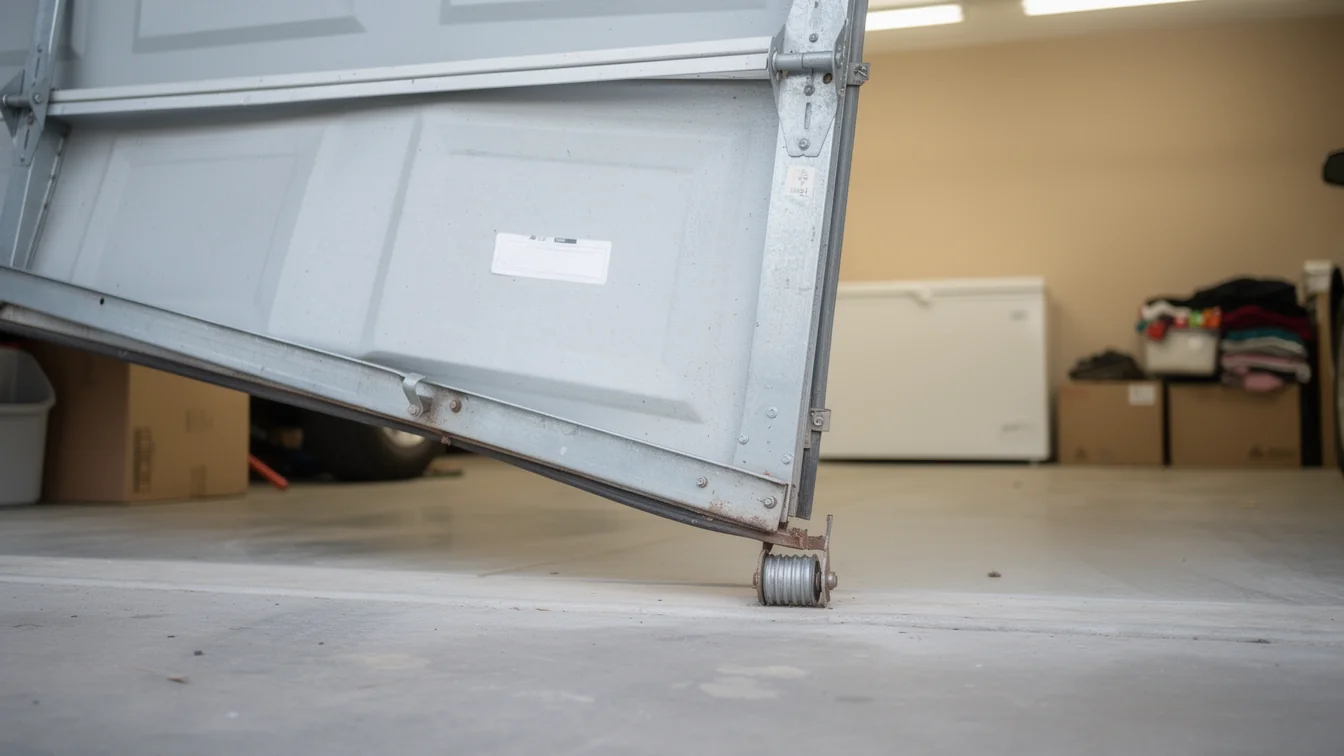
 Why a Garage Door Goes Off Track in Sunnyvale
Sunnyvale's 1960s-era tract homes and mild climate mean tracks drift for reasons different from newer builds.
What Really Breaks a Spring in Sunnyvale
Sunnyvale's mild climate hides a different problem: 1960s-era torsion springs in homes built 1947-1987 that are simply worn out. Here's what actually breaks them.
Local detail
What the Weather Here Does to It
Sunnyvale sits in a mild temperate band, so you're not dealing with the hard freezes that snap brittle steel overnight the way a Midwest winter does. That's the good news. The less obvious part is that mild doesn't mean stable. A 45-degree night followed by a sunny 65-degree afternoon is a normal swing here, and that daily flex works on steel the same way flexing a paperclip does, just slower. For a spring installed in 1998 that's background noise. For a spring that's been on the door since the house was built, it's a different story.
Most of the housing in this service area went up between 1947 and 1987, with the bulk of it dating to the 1960s and 70s. A torsion spring rated for roughly 10,000 cycles doesn't care that the weather here is mild - it cares how many times the door has opened and closed since Nixon was in office. When a spring goes in cold weather here, it's rarely the cold doing the breaking. It's an old spring that was already near the end of its coil life, and a cool morning happened to be the day the last cycle landed.
The area
When to Get Help
Call before the spring fully lets go if you can catch the warning signs. A door that's gotten noticeably heavier to lift by hand, a visible gap opening up in one of the spring coils, or a loud bang from the garage followed by a door that won't budge - that last one means it's already broken and the opener is straining against dead weight. Don't try to force it open with the opener motor; that's how you burn out a motor on top of a spring job.
If the door is off its track, if a cable has come loose from the drum, or if one side of the door is visibly lower than the other, stop operating it entirely. Those conditions put uneven tension on a system that was never designed to run unbalanced, and continuing to use it risks the panel itself, not just the spring. A stuck door is an inconvenience. A door that's half-open with a snapped cable under tension is a hazard to anyone near it.
What we find
The Situation
Across this service area's roughly 298,406 households, a large share of the owner-occupied houses - about 110,090 of them - were built in that 1947 to 1987 window, with the median landing around 1964. In older pockets like Old Mountain View, Heritage District, and Cuesta Park, it's common to find a door still running on whatever torsion hardware came with the house, not a replacement system installed sometime in the last couple decades.
That matters because spring sizing and drum configuration changed over the decades, and an original 1960s setup isn't always a simple swap with parts off the shelf. With a median household income in this area around $207,750, a lot of owners are in a position to replace a tired door outright rather than keep patching a fifty-year-old system, and for some of these original setups that's genuinely the more sensible call than chasing another repair on hardware that's outlived its design life several times over.
How we work
What to Check
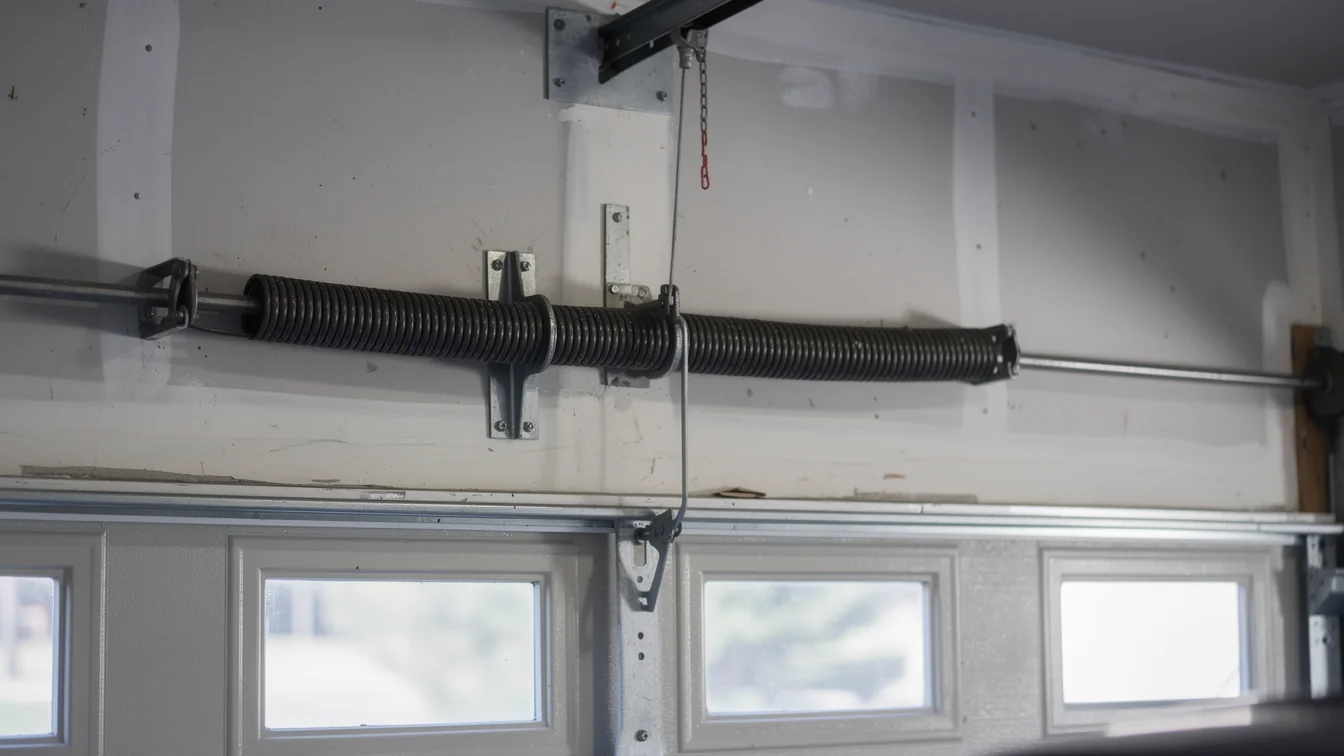
Look at the spring itself first. A torsion spring sits above the door on a metal shaft; if you can see a clear gap in the coil, it's broken, and you should stop using the opener until it's replaced. Next, check the cables on either side of the door for fraying or looseness - a cable that's slipped off its drum will often show up as a door that hangs crooked.
Listen for grinding or popping rather than a clean roll when the door moves; older galvanized springs from the original 1960s and 70s builds tend to announce fatigue with noise well before they fail outright. We don't recommend attempting a torsion spring replacement yourself - the spring is under real tension and the tools for it aren't something most garages have lying around. One honest limitation: on some of the original hardware from the oldest builds in this area, matching parts can take longer to source than a standard modern spring, so if your door dates to the house itself, expect that the fix might take a bit more lead time than a newer system would.
Questions
Common questions
Does Sunnyvale's mild climate mean my spring won't break from weather?
It lowers the odds compared to a place with hard freezes, but it doesn't eliminate the issue. Daily swings between cool mornings and warm afternoons still flex the steel, and on a spring that's already decades old from the original 1960s-70s housing stock, that's often enough to finish it off.
My house was built in the 1960s - is the spring still original?
It's possible. A lot of homes in this area date to that era, and torsion springs don't always get swapped unless they've failed or the door was replaced. If you've never had the spring serviced, assume it's close to or past its rated cycle life.
Is it worth repairing an old door or just replacing it?
Depends on the door and the hardware. For some of the original setups from the 1947-1987 building period, parts can be harder to match quickly, and given typical household budgets in this area, full replacement is often the more practical route rather than repeated patch repairs.
Recommendation
You Might Also Like
More garage door guides for Sunnyvale homeowners.
Why a Garage Door Goes Off Track in Sunnyvale
Sunnyvale's 1960s-era tract homes and mild climate mean tracks drift for reasons different from newer builds.
 Replacing a Garage Door in Sunnyvale
A guide for Sunnyvale homeowners on replacing a garage door, built around this area's 1960s-70s housing stock and mild coastal climate.
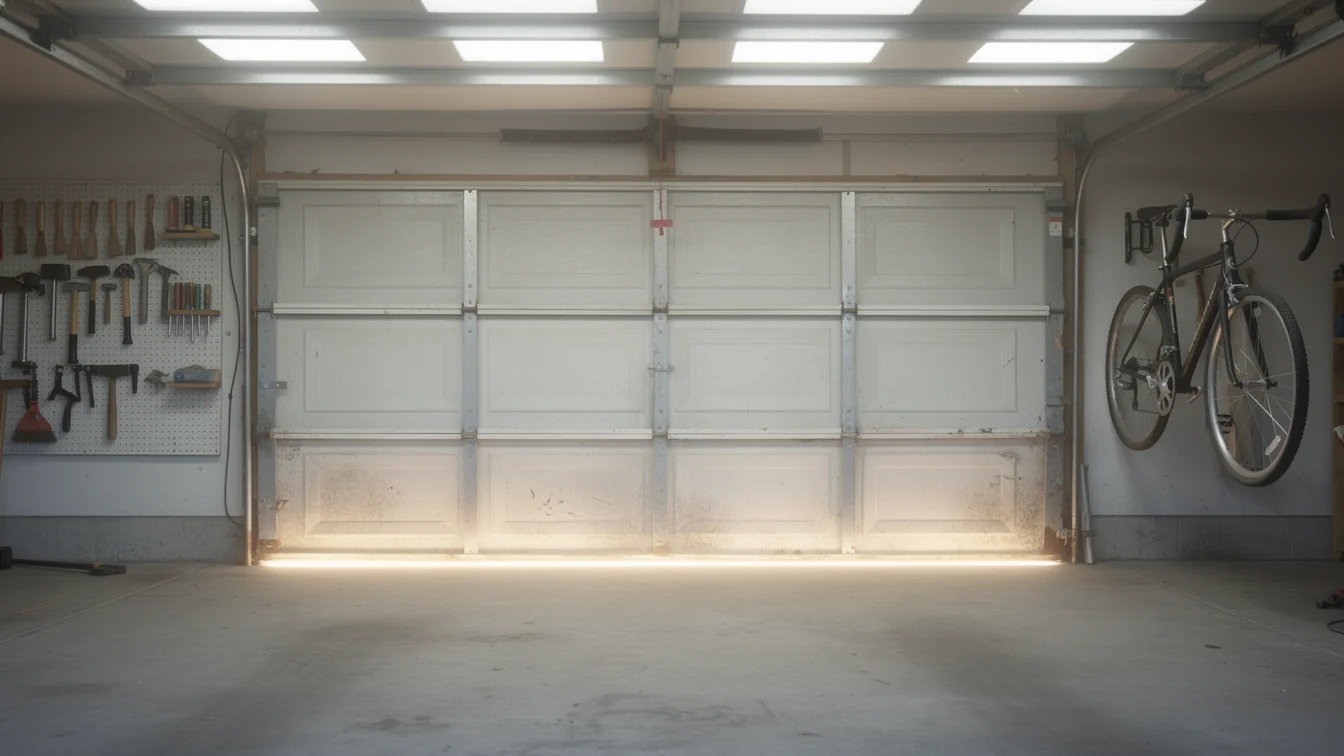 What an Uninsulated Door Does to a Sunnyvale Garage
Sunnyvale homes built 1947-1987 often have garage doors with no insulation layer at all.
Ready when you are
Need a garage door sorted in Sunnyvale?
Sunnyvale Garage Door Pros repairs and installs garage doors, springs and openers in Sunnyvale, CA and the surrounding area.