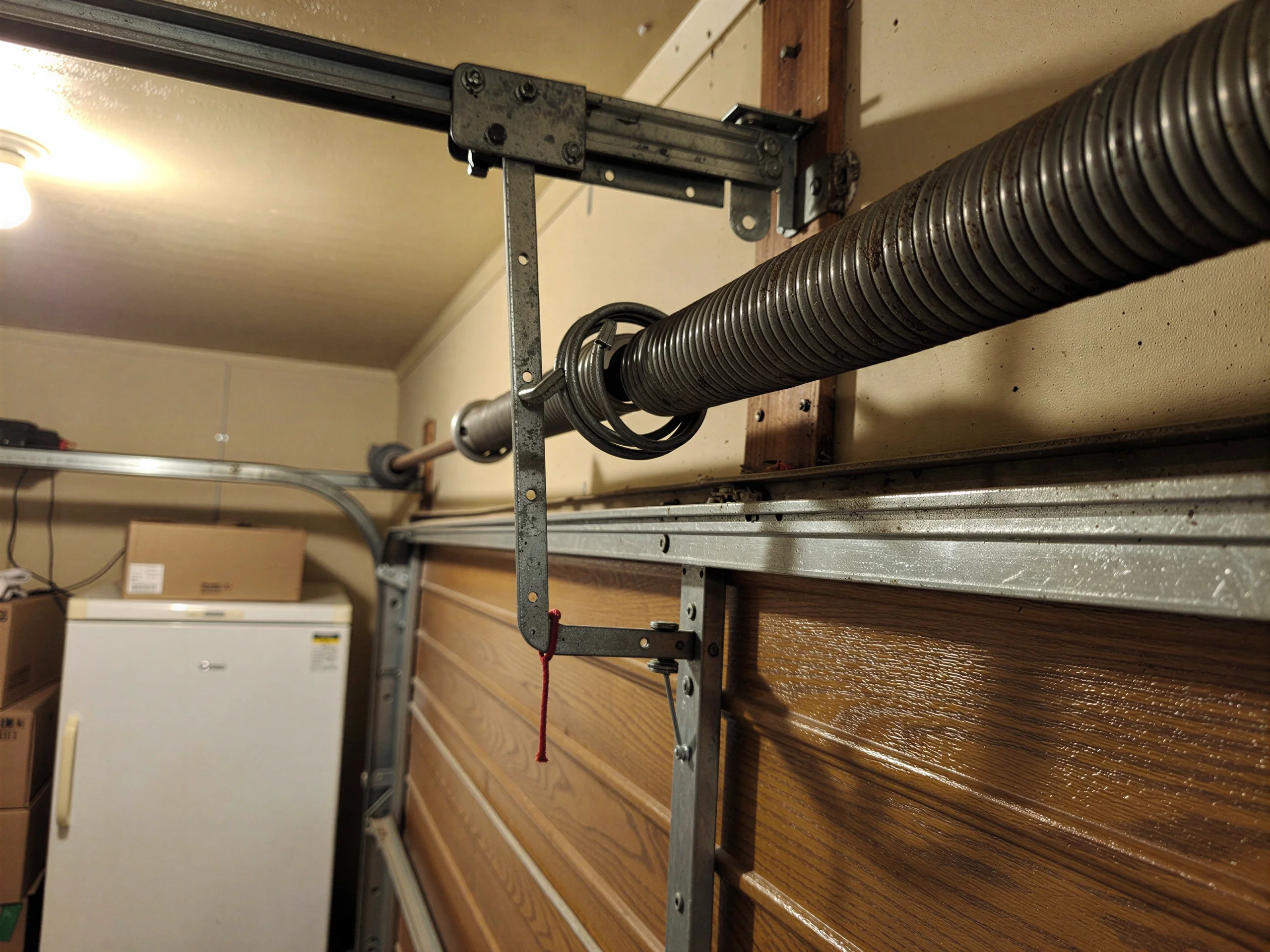
Sunnyvale's housing stock runs mostly 1947 to 1987, with a median build year of 1964, and that's the whole story behind why these failures cluster the way they do. A door installed when a house in Alta Mesa or North Los Altos went up is now 50 to 75 years into a service life that torsion springs were never built for. Most residential springs are rated for somewhere around 10,000 open-close cycles. A door used twice a day hits that number in under 15 years. Across the 1960s and 70s stock that makes up most of this service area, that threshold has been crossed more than once.
Sunnyvale's mild temperate climate actually works in homeowners' favor here - there's no freeze-thaw cycle cracking hardware or swelling wood panels the way it would in a harsher climate band. So when something fails here, it's almost never weather damage. It's fatigue. Metal that's opened and closed tens of thousands of times, nylon rollers that have gone brittle from age rather than cold, cables that have simply worn through at the same contact point for decades.
That distinction matters for the fix. A weather-damaged door often needs sealing or panel work. A fatigue-failed door needs the worn part replaced with something rated for another few decades of the same job.