
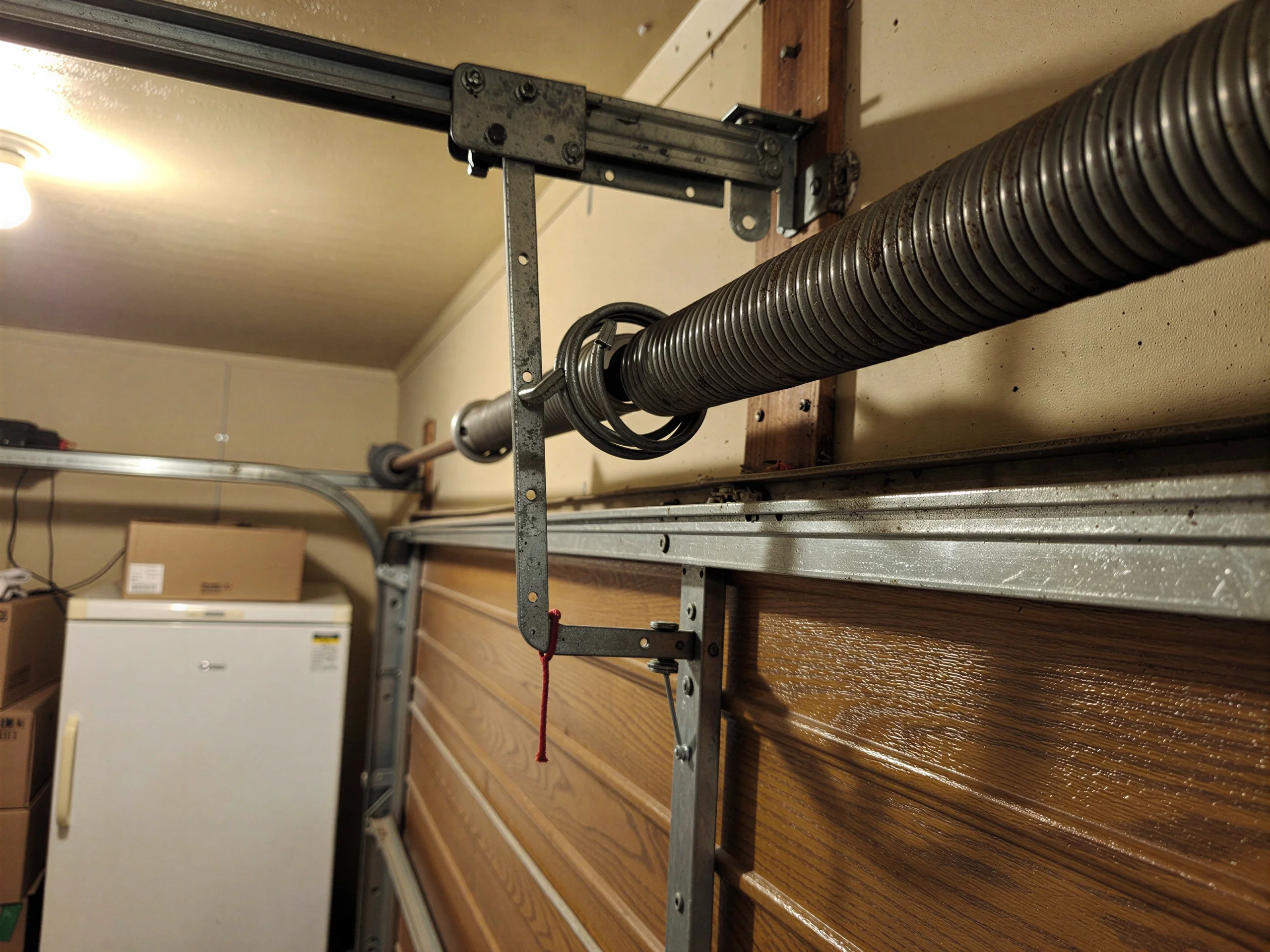
Original rafter brackets
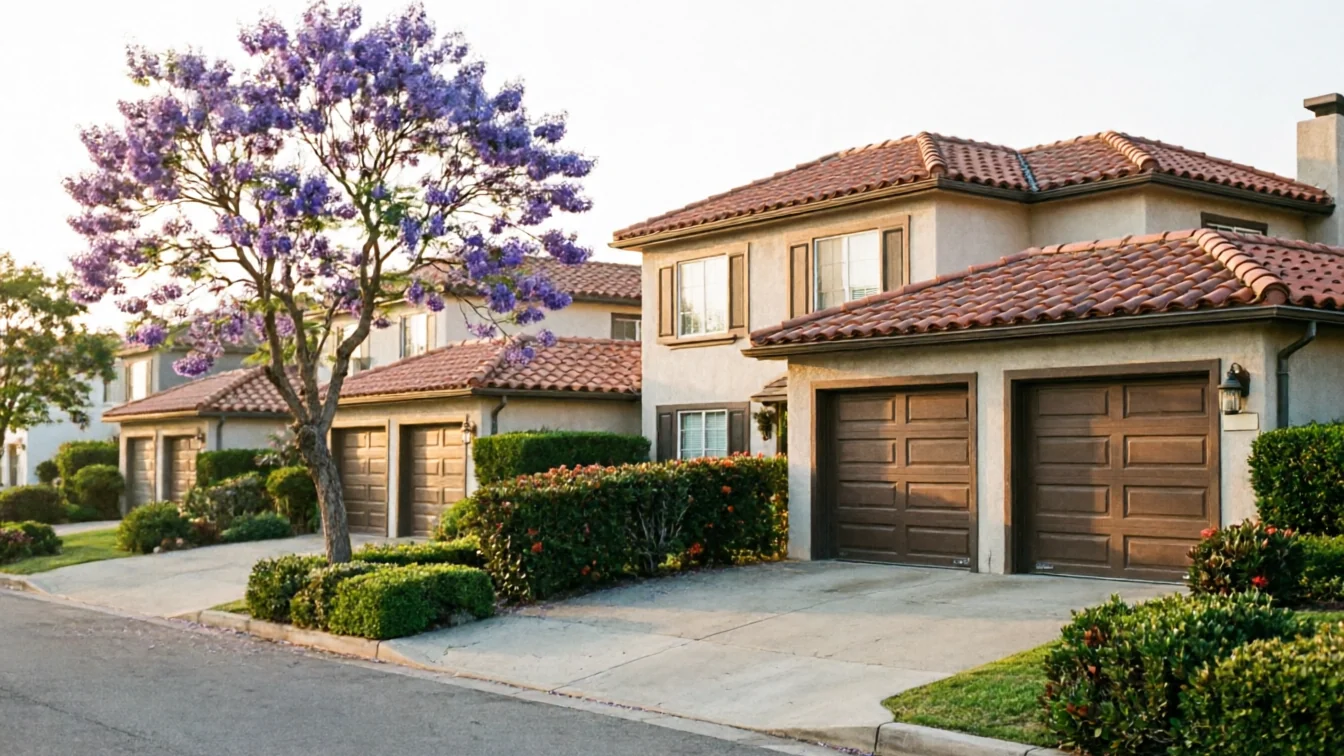
With a median build year of 1976 in this part of the hills, a lot of these garages still have their first or second opener, usually a chain-drive unit bolted to the same rafter bracket from the original install.
Los Altos Hills, Sunnyvale
Homes in Los Altos Hills average a 1976 build year, meaning openers are overdue for the 1993 safety-sensor upgrade. We install from our Sunnyvale shop, 6 miles out.
On the truck
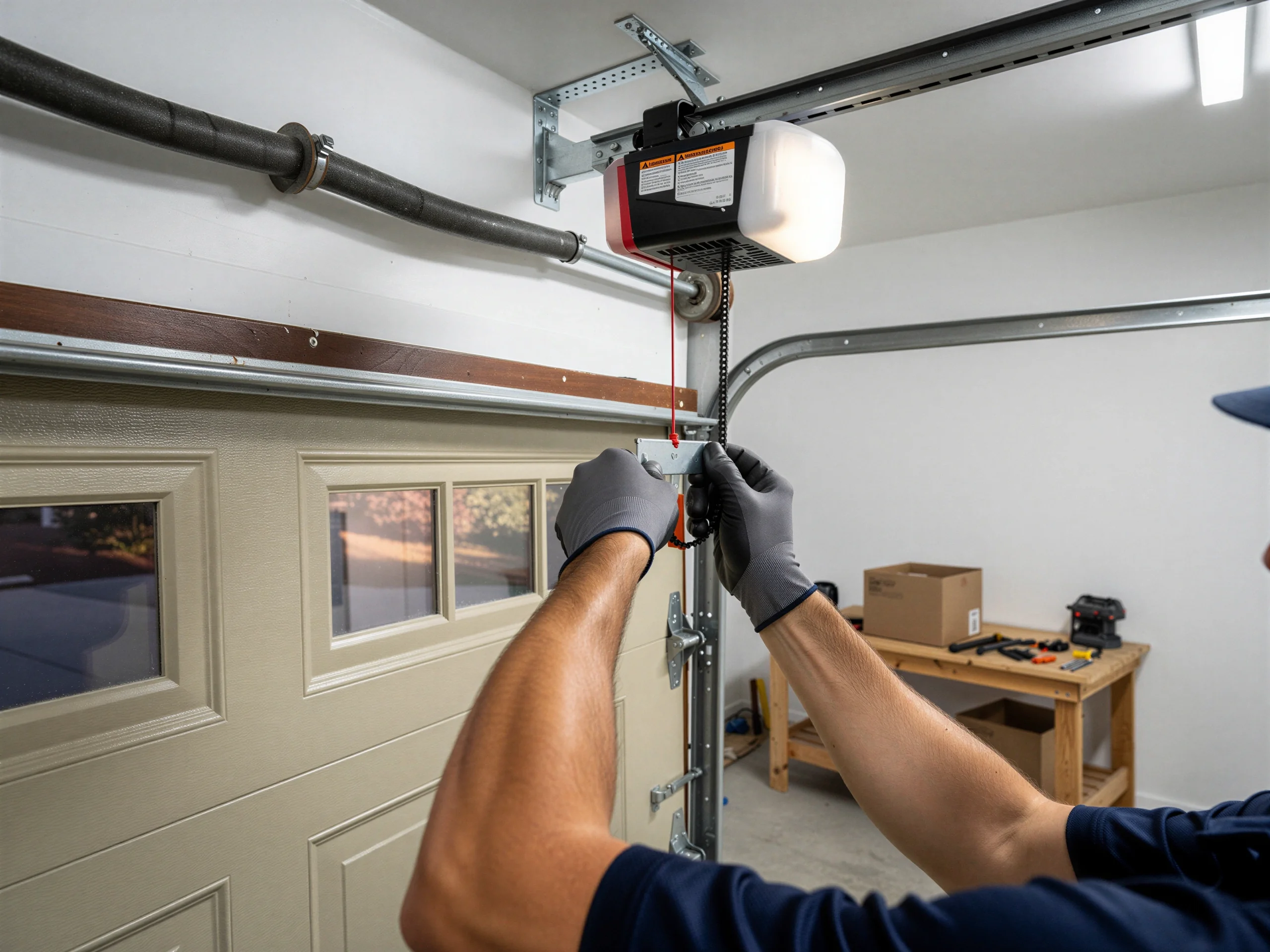
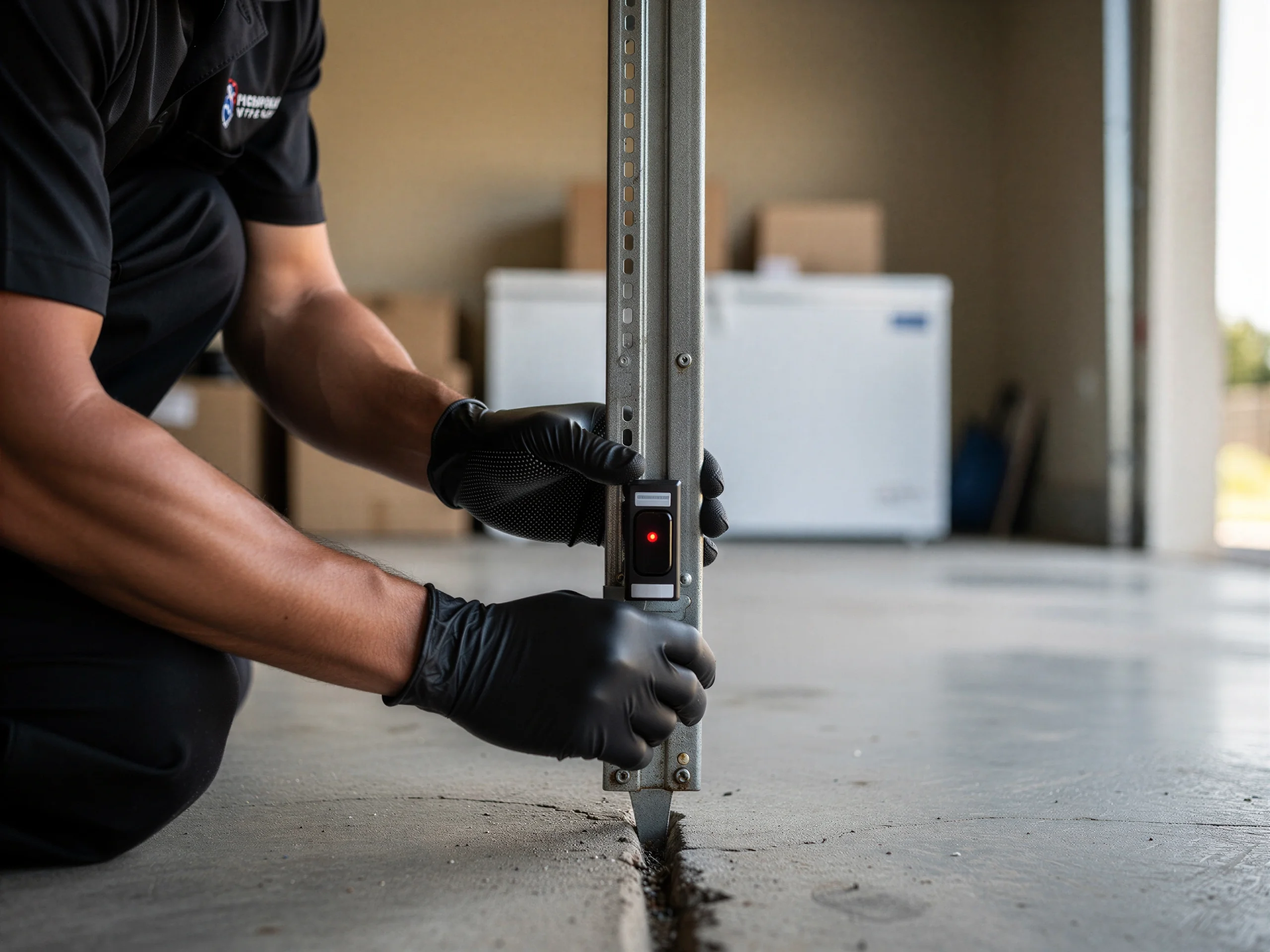
We stock belt-drive and chain-drive openers with modern photoelectric safety sensors, since most of what we pull out of Los Altos Hills garages predates the 1993 federal rule requiring them.
With a median build year of 1976 in this part of the hills, a lot of these garages still have their first or second opener, usually a chain-drive unit bolted to the same rafter bracket from the original install.
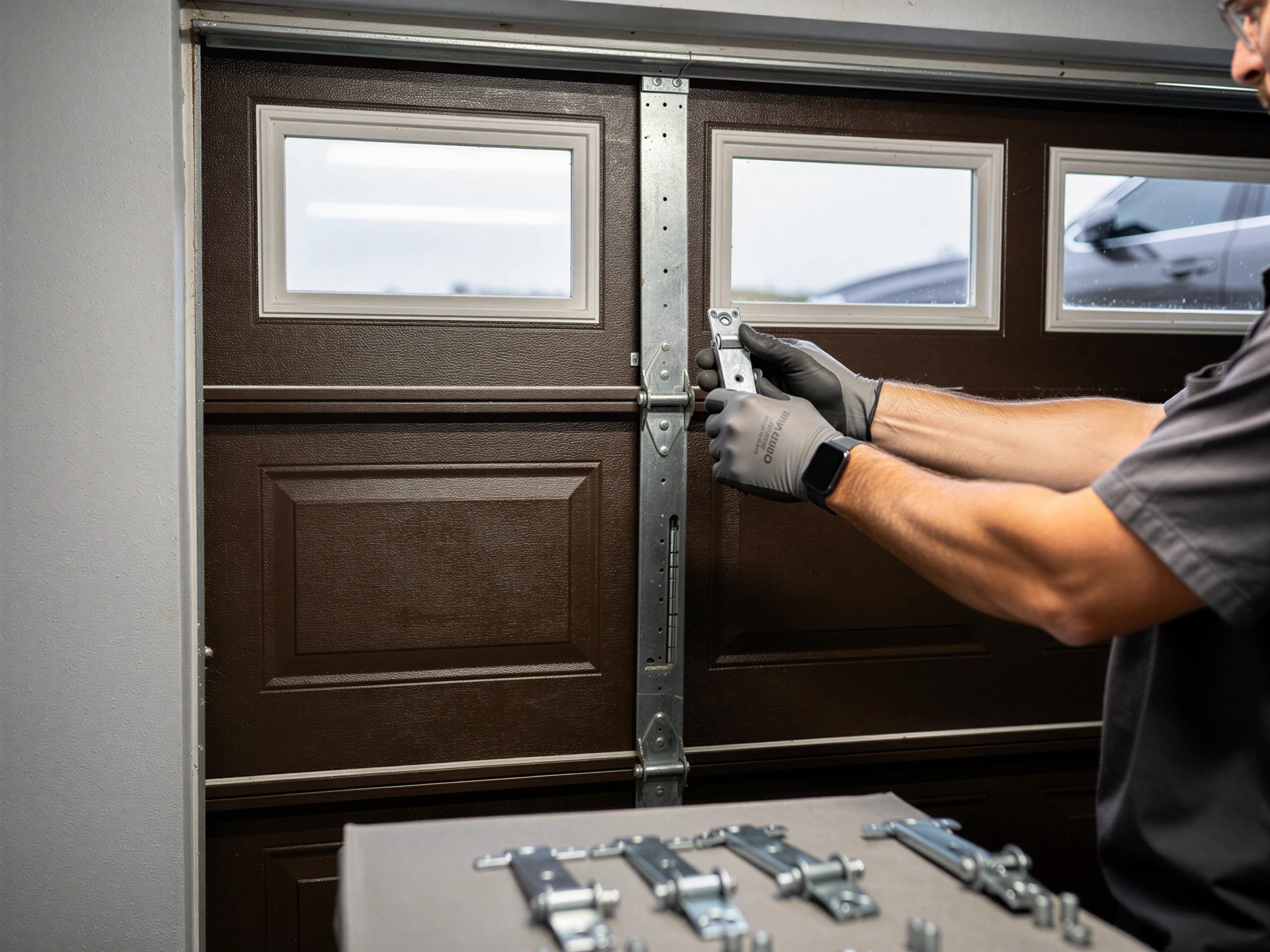
We carry the brackets, rail extensions, and wall console wiring to match those older mounts, plus battery-backup units, since a long driveway up to a hillside lot means you don't want to be stuck pulling a manual release cord in the dark.
We don't stock every niche opener brand on the market - if your unit is an obscure import or a commercial-grade model, we'll tell you that up front rather than order a part that sits on a shelf for a month.
Symptoms
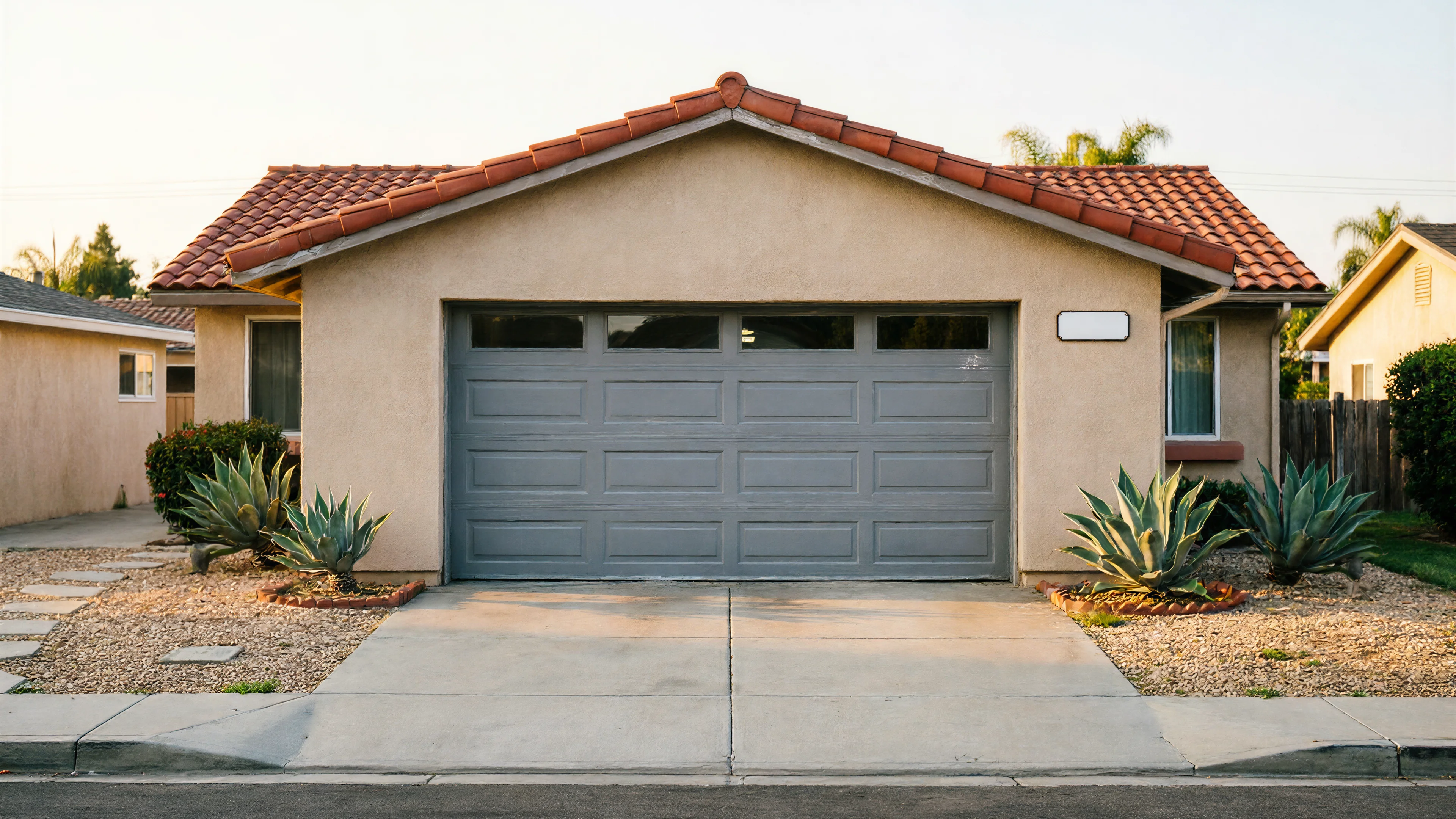
The call we get from this area is usually the same: the opener runs but the door doesn't move, or it moves a few inches and reverses. On a house built in the mid-1970s, that's almost always the drive gear inside the opener housing, a small plastic part that strips out after a few decades of use, especially if the unit has never been serviced. Sometimes it's the opener straining against a spring that's also original to the house - the motor isn't broken, it's just fighting hardware from 1976 that was never meant to last this long. We also see openers that still run on a mechanical limit switch instead of modern electronic limits, which means the door bangs against the frame or won't close flush, a problem new installs don't have.
DIY or pro
Serving Sunnyvale, CA
Swapping an opener yourself is doable if the door and track are in good shape and you're comfortable on a ladder with a torque wrench. Where it goes wrong on homes like these is the wiring and the bracket. A 1976-era garage often has household wiring and a header bracket sized for a lighter, older unit, so a new opener's hardware doesn't always bolt straight to what's there. If you're not sure whether your spring is original too, that's not a DIY call - a spring under tension failing while you're reaching into the housing is how people get hurt. If the spring looks original or you can't tell, have it checked before you touch the opener.
The repair
We start by checking whether the existing bracket, rail, and header will take a new opener as-is, which it usually won't on a house this age without some adaptation.
We mount the new unit, run fresh wiring to the wall console, pair the remotes and sensors, and set the travel limits electronically instead of relying on the old mechanical screws.
Because the area sees mild temperatures year-round, we're not dealing with cold-weather lubricant issues or frost-swollen wood jambs the way some climates do - the job is mechanical, not weather-driven.
Given the median income in Los Altos Hills runs well above the surrounding service area, we see more requests for the quieter belt-drive models and battery-backup units here than in the flatter, lower parts of the territory, and we carry both.
Watch-outs
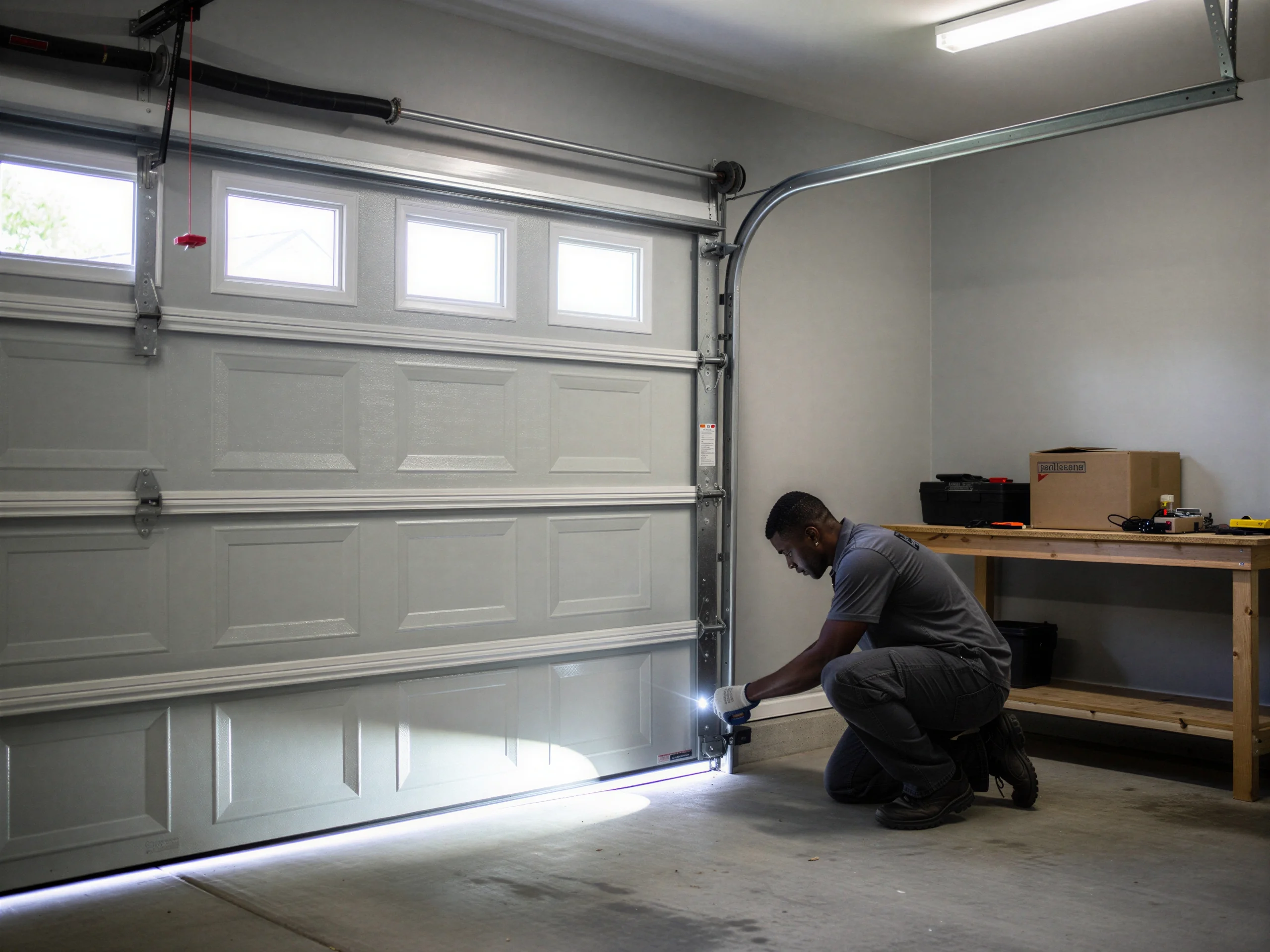
The biggest risk on a 1976 build is the spring, not the opener. If the torsion spring is original - and on a lot of these houses it is - swapping to a stronger modern opener can put new strain on hardware that's been quietly wearing out for close to fifty years. We check the spring and cable condition before we install, and if either looks original or compromised, we'll say so rather than hang a new motor on a system that isn't ready for it. The other issue is header strength: some of these garages were framed for a lighter manual door, and a heavier insulated door paired with a new opener needs a header check first. We won't install an opener on a door we haven't looked at.
Questions
It's possible, especially if no one in the chain of owners mentioned replacing it. The giveaway is a mechanical limit switch and no photoelectric eyes near the floor - those sensors became required in 1993, so anything without them predates that rule or was installed secondhand. We check this on every call in the area.
No, we work out of Sunnyvale and drive out, about 6 miles. We don't keep a local yard or stockroom in Los Altos Hills, so anything unusual we need gets brought with us on the truck rather than picked up on site.
Usually, but not always. On houses from this era the header bracket and rail mount were sized for the original unit, and a heavier modern opener sometimes needs a stronger bracket or a header check first. We look at this before we quote the job, not after.
That's typically a mechanical limit switch instead of an electronic one, common on openers from the 1970s and 80s. It means the stop point was set by hand and drifts over time. New openers set limits electronically, which fixes this permanently.
Explore more
Ready when you are
Sunnyvale Garage Door Pros repairs and installs garage doors, springs and openers in Sunnyvale, CA and the surrounding area.