
Track spacing shims
Track spacing can be a half-inch off from what current rail kits assume, which means shimming the jamb rather than bolting straight to it. The other issue is the opening itself.
Loyola, Sunnyvale
New garage door installs in Loyola, CA, where most houses date to 1971. We size doors to original openings and advise on insulation for this climate band.
Local causes
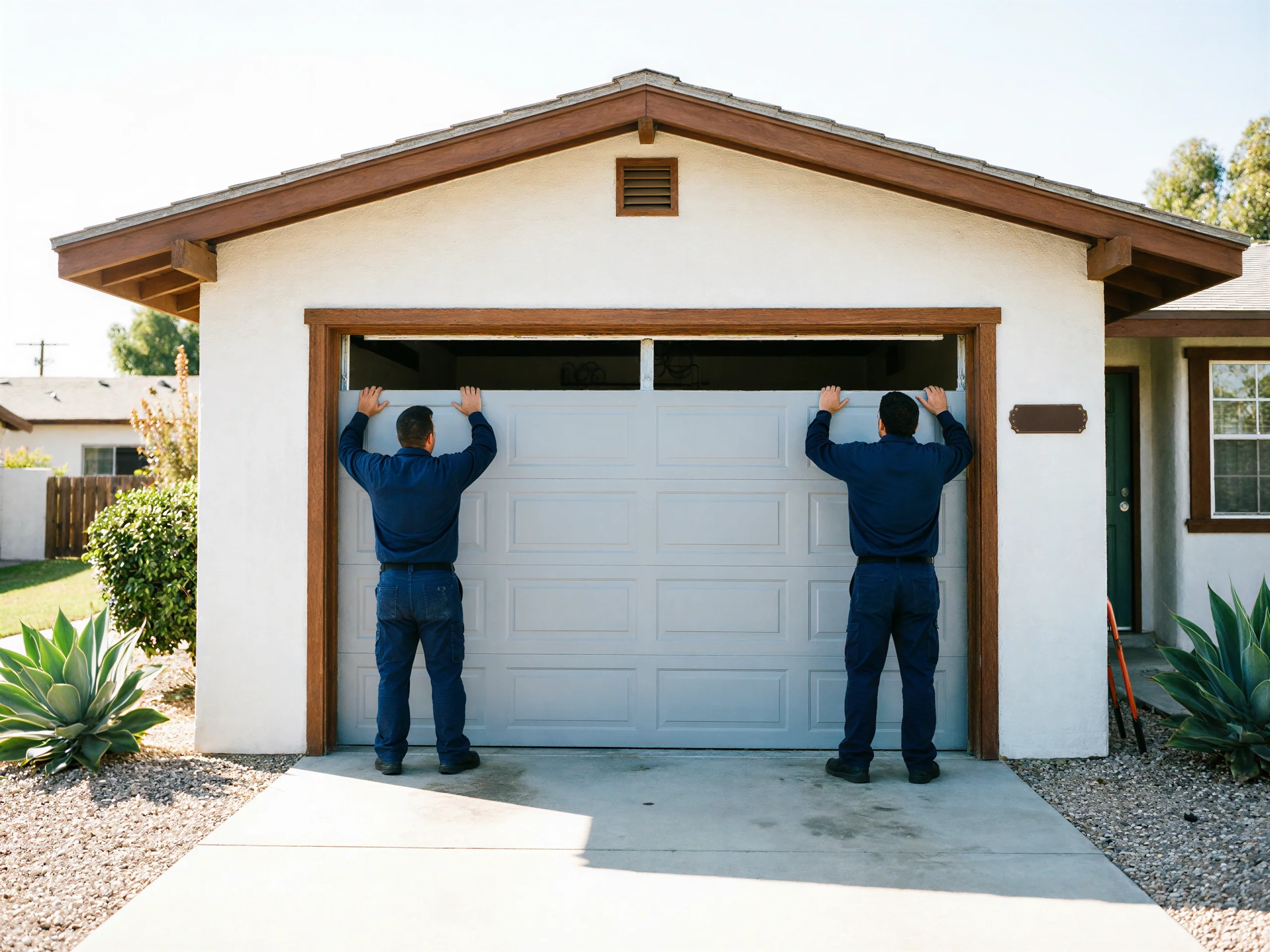
The call we get most from Loyola isn't about a door that broke overnight. It's about a door that's been limping along for a decade and finally isn't worth patching. The reason shows up on the work order before we even see the house: the opener is original, the track is bent from one too many adjustments, and the panel seams are the kind nobody manufactures flat stock for any more.
That traces straight back to when the neighborhood went up. Loyola's housing stock centers on 1971, and that's not a coincidence of one street - it's consistent with the broader 1947-1987 build window across this part of the service area. A door installed when a 1971 house was framed is now in its fifth decade of torsion cycles. Steel gauges were thinner then, rollers were steel-on-steel with no nylon sleeve, and insulation, if there was any, was a quarter-inch of foam board stapled to the back panel. None of that is a defect. It's just what the trade built fifty years ago, and it's why so many of these doors come due for full replacement around the same age, not a repair.
Watch-outs
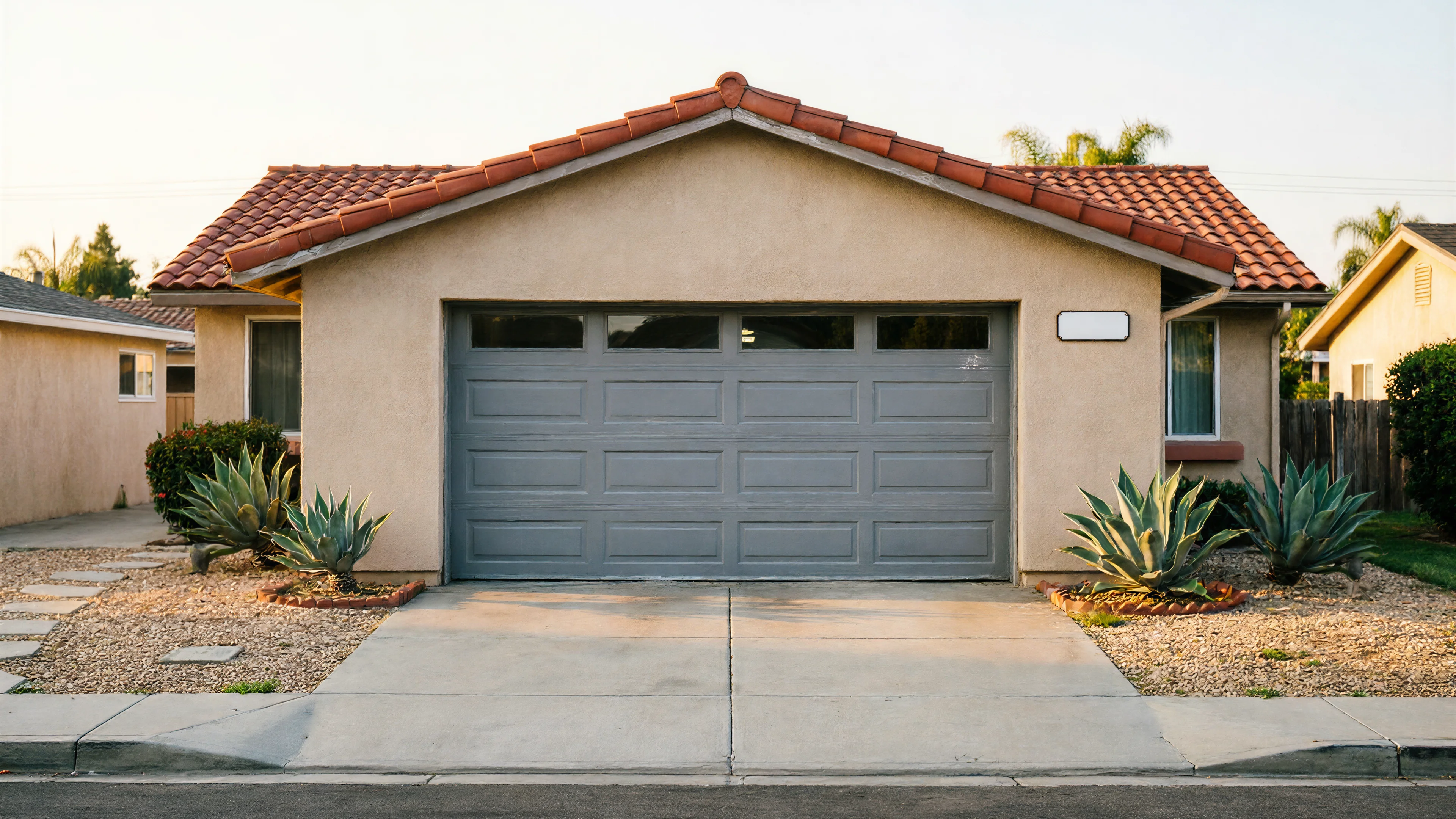
Swap a new door onto a 1971 opening and you run into problems that a newer house never had. Headroom is often tighter than current torsion spring hardware wants, because the original low-headroom brackets were sized for a different spring style.
Track spacing can be a half-inch off from what current rail kits assume, which means shimming the jamb rather than bolting straight to it. The other issue is the opening itself.
A lot of 1971-era garages were framed for an 8-foot or 9-foot door at a width that doesn't match today's standard sizing exactly. We measure before we quote, because guessing on a Loyola opening from a catalog spec sheet is how you end up with a door that doesn't seat square against the weatherstrip.
One limitation worth saying plainly: if the jamb itself has settled or rotted at the base - common once a wood frame passes the half-century mark - that's carpentry work, not garage door work, and we'll tell you to get that fixed first. Installing a new door against a frame that isn't square just moves the problem, it doesn't solve it.
DIY or pro
A new garage door looks like a kit-build project right up until you're holding a wound torsion spring over your head. It isn't. The springs on a standard double door store enough energy to break a wrist or worse, and the winding bars and cable drums that come with a new door kit assume you already know how much tension is correct for that door's weight - which varies by panel material and insulation, not just size.
What you can reasonably do yourself: swap weatherstripping, replace a cracked panel, lubricate hinges and rollers, or clean and adjust the track. What you shouldn't: set spring tension, rewire a new opener's safety sensors, or cut a new header for an opening that's out of square.
We don't stock a depot in Loyola - this job travels from Sunnyvale, 5 miles out - but that distance doesn't change the install itself. It just means we schedule the visit rather than walk over.
Given the median household income here is $250,001, most of the installs we spec land in the insulated steel or composite-overlay range rather than the bare single-skin door that came standard in 1971.
Symptoms
The giveaway that it's time to replace rather than repair isn't usually one dramatic failure. It's a door that needs the opener to push harder every month, a panel bottom that's rusted through at the weather seal, or a track that's been re-bent so many times it's no longer straight enough to true up.
In Loyola specifically, we see a particular version of this: doors original to 1971 construction that have had the spring replaced once, the opener replaced once, and are now asking for a third intervention on hardware that's simply reached the end of its design life.
At that point a new door with current rollers, a galvanized torsion spring rated for the actual door weight, and insulation suited to this mild temperate band costs about the same as a third round of patch repairs - and it doesn't need a fourth.
If your door is sticking halfway, reversing on its own, or sagging visibly at the center rail, that's worth a measure visit before it fails outright. For repair-only calls short of a full swap, see our Loyola repair page.
Questions
Most of the original doors we're asked to replace in Loyola date to around 1971, which is when most of the housing in this part of the service area went up. By now that's roughly fifty years on the original torsion spring and hardware, which is past the realistic lifespan for steel-on-steel rollers and unreinforced panel steel.
No. We run out of Sunnyvale, about 5 miles away, and schedule Loyola installs as a standard visit rather than a special trip. There's no separate depot or branch here - one company, one shop, serving the surrounding towns including Loyola.
Often yes, but not always. Headroom clearance and track spacing standards have shifted since 1971, so we measure the opening before quoting. If the jamb has settled or the framing is out of square, that's a carpentry fix we'll flag separately rather than force a door into.
This area sits in a mild temperate band, so insulation here is more about noise and a stiffer, quieter panel than about blocking extreme heat or cold the way a door in a harsher climate needs to. Most Loyola homeowners we quote choose a mid-tier insulated door for that reason, not the thickest option available.
Explore more
Ready when you are
Sunnyvale Garage Door Pros repairs and installs garage doors, springs and openers in Sunnyvale, CA and the surrounding area.